Why Fiber

Fiber Built for the Way Your Property Connects

Guests, residents, and remote workers expect consistent, reliable internet the moment they arrive. In a multi-dwelling environment, that standard starts with fiber. SecureVision has spent two decades engineering managed fiber networks for Gulf Coast properties.

The Expectation

Your guests expect the internet they have at home.

Five years ago, most guests treated vacation internet as a convenience. Today, visitors bring full work-from-home bandwidth demands with them. Video conferences, content uploads, streaming across multiple devices per person, and connected accessories like smart speakers and security cameras have all become the baseline. Full-time residents and seasonal owners carry the same expectations.

That baseline has historically been difficult to deliver in multi-dwelling properties, which have trailed residential internet by five to ten years. Single-family homes received gigabit service a decade ago, while many MDU providers were still delivering 50 to 200 Mbps. SecureVision has been closing that gap, delivering gigabit speeds to more than 90 percent of its current properties.

Happy family in a vacation rental living room while a boy plays a video game with a controller.
The Fiber Advantage

What Makes Fiber the Standard for Modern Properties

Symmetrical Speed

Fiber delivers symmetrical upload and download speeds. Where coax offers fast downloads but limited upload capacity, fiber removes that bottleneck. Guests on video calls and residents uploading files get consistent speed in both directions.

Built for Coastal Conditions

Copper wiring degrades in salt air and is vulnerable to corrosion, dry rot, and lightning damage. Fiber is glass. It does not rust, corrode, or degrade, and it delivers consistent performance for twenty years or more after installation.

Room to Grow

Copper cabling requires generational replacements to support faster speeds. Fiber does not. Future upgrades require only an equipment swap, not new construction. SecureVision builds every deployment to support double the requested speed capacity.

Technical Comparison

Fiber, Coax, and Ethernet Side by Side

Fiber, coax, and Ethernet each carry internet differently. Here is how they compare on the factors that matter.

Factor Fiber Coax Ethernet (Copper)
Download Speed Up to 100 Gbps 100x the ceiling of coax or copper Up to 1 Gbps Up to 1 Gbps
Upload Speed Symmetrical Upload matches download speed ~50 Mbps typical Fraction of download speed Symmetrical
Coastal Durability No corrosion Glass fiber, unaffected by salt, moisture, or lightning Degrades in salt air Copper is susceptible to rust, corrosion, and lightning Degrades in salt air Copper is susceptible to rust, corrosion, and lightning
Capacity Ceiling No practical limit Current technology has not reached fiber's maximum Cable-generation limited Requires new cable standard for each speed tier Cable-generation limited Cat 5E, Cat 6, Cat 6A each have a fixed ceiling
Upgrade Path Equipment swap only No re-cabling required New cable pull required New cable pull required Cat 5E to Cat 6 to Cat 6A
Infrastructure Lifespan 20+ years 5 to 10 years between upgrades 5 to 10 years between upgrades
Degraded Performance Built-in headroom Excess capacity keeps speeds usable even under stress May not deliver rated speed May not deliver rated speed
Latency Minimal Consistent under load Variable Affected by network congestion Low Impacted by cable length and quality

Managed Network

The difference between having fiber and having it managed.

A fiber connection establishes the speed capacity of a property's network. A managed fiber network determines whether that capacity actually reaches every guest's device.

With an unmanaged setup, the provider installs a router and can see whether it is on or off. If something goes wrong, the only option is to unplug it and plug it back in. The resident becomes their own network administrator.

SecureVision's managed approach works differently from the ground up. The team monitors every access point in the building, troubleshoots security cameras and connected devices remotely, adjusts signal strength and frequency bands per unit, and resolves most issues without dispatching a technician. The four-hour support response guarantee applies around the clock, with field support dispatched when a remote fix is not enough. The network is engineered so that most issues are caught and resolved before they affect anyone in the building.


Support specialist monitoring managed network operations.

Future-Proofing

An investment that outlasts the technology cycle.

Copper cabling requires generational replacements to keep pace with speed demands. A property wired with Cat 5E today will eventually need Cat 6, then Cat 6A, and each upgrade requires new cable pulls through the building. Fiber has no cable-level upgrade path because it does not need one. The same strand of glass installed today will carry speeds the industry has not yet commercialized.

When a property on fiber is ready for faster service, the upgrade is an equipment swap in the closet and the unit. In some cases, it is a configuration change made remotely. SecureVision engineers deployments with enough headroom to double the requested speed, so the infrastructure approved today still has room to grow years later.

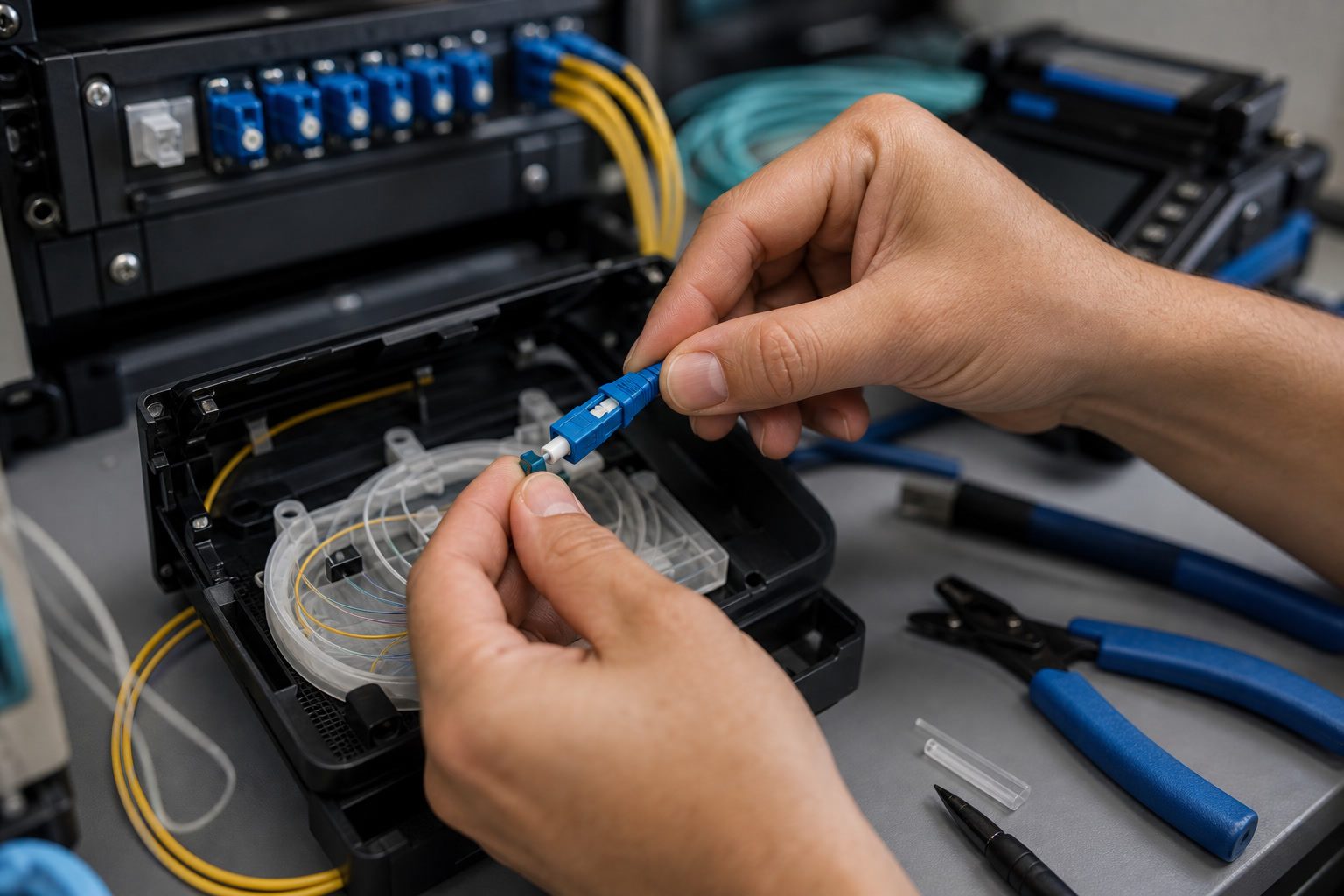
Technician handling fiber optic cable in a network workspace.

Financial Impact

The cost of waiting adds up every year.

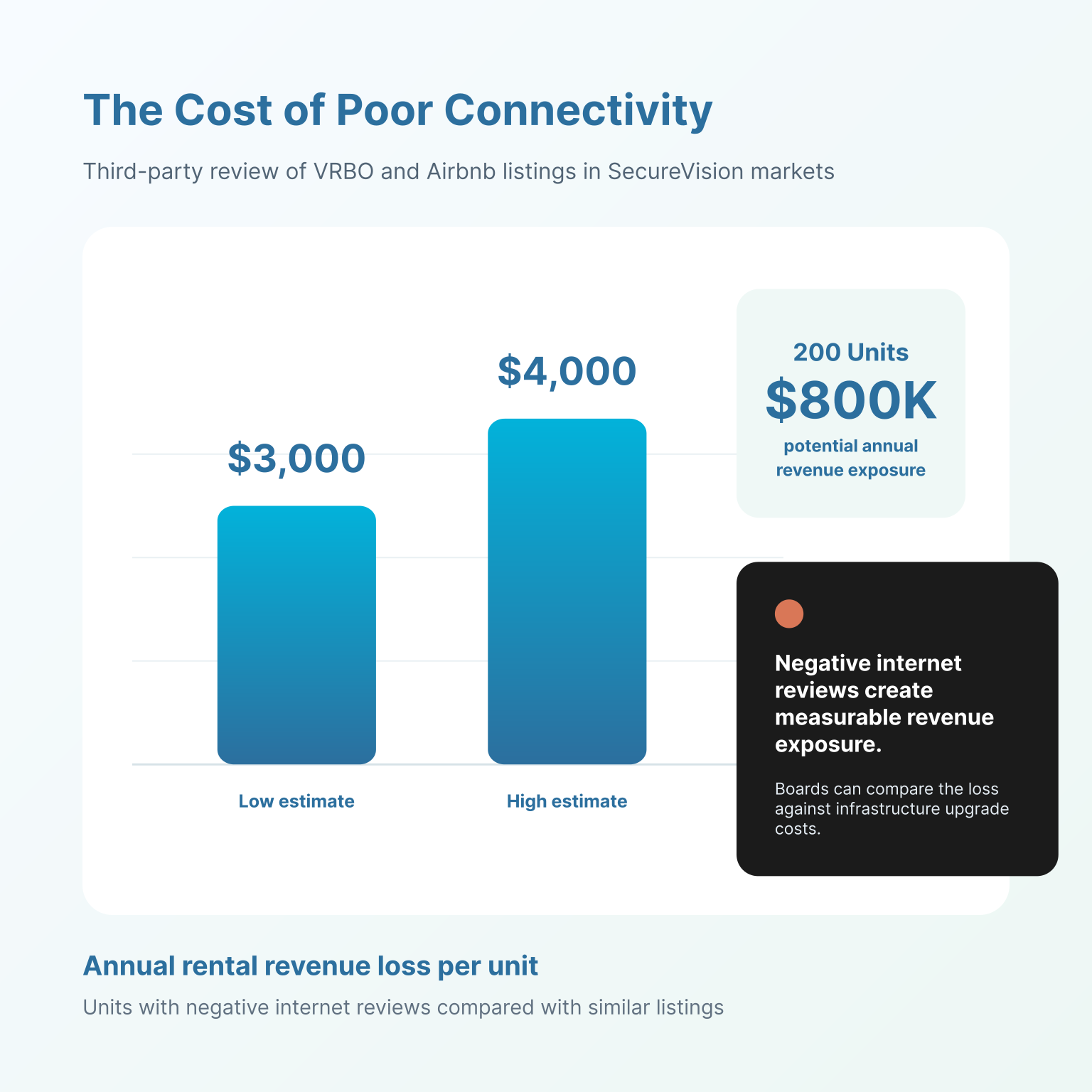
In 2024, SecureVision commissioned a third-party study that analyzed every VRBO and Airbnb listing in its markets and compared rental revenue between units with negative internet reviews and units without. Units with inadequate connectivity lose an estimated $3,000 to $4,000 per year in rental revenue. For a 200-unit property, that represents up to $800,000 in unrealized income every year. Internet quality is one of the first things guests mention when a stay goes poorly, and those reviews carry directly into the next month's rental revenue. SecureVision brings this data directly into board conversations, because hard numbers move decisions that general arguments cannot. For a property weighing the cost of an infrastructure upgrade, the more useful question is what the current setup is already costing.

Chart showing annual rental revenue loss from negative internet reviews.

Fiber Review Topics

6 questions
What is the difference between fiber and coax?
Coax delivers fast download speeds but limited upload speeds, typically around 50 Mbps upstream even on its highest tier. Fiber delivers symmetrical speeds, meaning uploads and downloads run at the same rate. That distinction matters for video calls, cloud storage, and any activity that requires sending data upstream. Fiber also carries significantly more total capacity and is not subject to the physical degradation that affects copper over time.
How does fiber handle the demands of a large building?
A fiber backbone provides enough capacity to serve an entire multi-dwelling property without congestion. SecureVision installs fiber to the building and through the risers on every project, with distribution closets every two to three floors. The network is designed to support double the requested speed capacity from day one, so future upgrades do not require new infrastructure.
What does a managed fiber network mean for my property?
A managed network means SecureVision monitors and maintains the network after installation. The team can see connected devices, troubleshoot issues remotely, adjust WiFi settings, and resolve problems before residents or guests notice them. Password resets, new device setup, and security questions are handled with a phone call. An unmanaged network, by contrast, provides an internet connection and leaves network management to the building or the individual unit.
Does fiber require ongoing maintenance or replacement?
Fiber cabling requires no generational replacement. Once installed, it serves the property for twenty years or more. Speed upgrades happen through equipment changes, not through re-cabling the building. SecureVision also proactively refreshes network hardware on a regular cycle to keep performance ahead of equipment aging.
Will guests and residents actually notice a difference?
Guests notice when internet does not work, and they mention it in reviews. With fiber and a properly engineered WiFi network, guests experience the same quality they have at home: reliable streaming, responsive video calls, and fast connections across every device. The goal for a hospitality property is for connectivity to be something guests never have to think about.
What if our building already has wiring in place?
SecureVision evaluates existing infrastructure during the site survey. If the current wiring is in good condition, the team may incorporate it into the new network design. If the previous installation had known performance issues, SecureVision typically plans a full build to ensure full control over the network. Fiber to the building and through the risers is part of every project regardless of existing conditions.
Learn More
Connect

Every property has different connectivity needs.

SecureVision's team is available to assess your building, discuss fiber options, and answer questions from your board or management team.